Sermon Series: Psalms For Your Summer
Featured
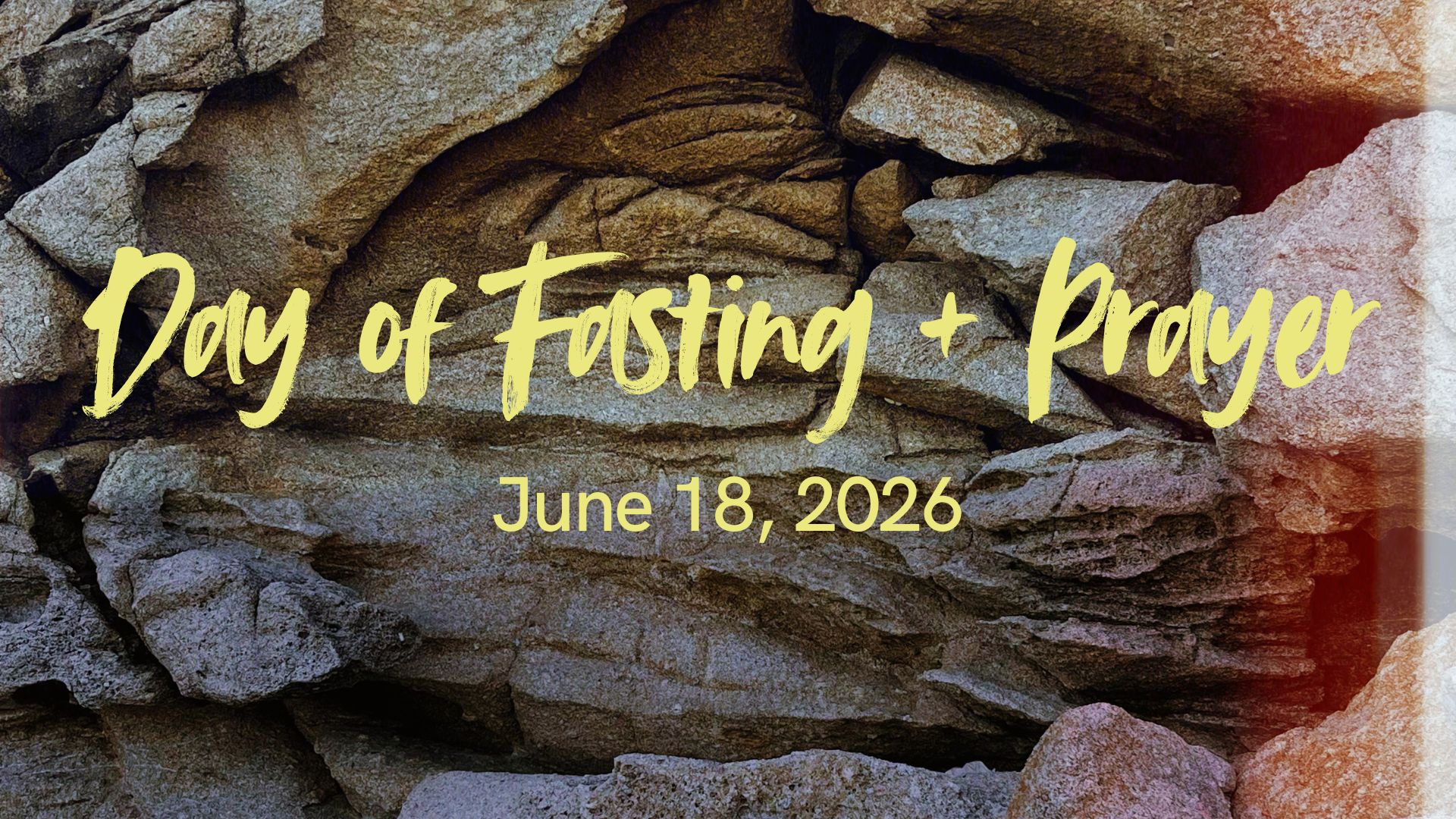
This week, our denomination (the EPC) gathers for its annual General Assembly & Gospel Priorities Summit. This year’s meeting will include a significant vote, taking place on Thursday, June 18. As a church, we are setting aside this day to fast and pray together—asking God for wisdom, unity, and faithfulness to Christ.
When you heard this call to fasting and prayer, you may have asked, “Why are we fasting? What does that accomplish? Should I participate? If so, what should I do?” Our goal here is to answer those questions and point you to resources for further reflection.
In short, fasting is “a whole-body response to a grievous sacred moment” (Scot McKnight, Fasting: The Ancient Practices, Thomas Nelson, 2009).
Humans are spiritual beings, and as such we often respond to significant moments in a spiritual way—through prayer. We are not merely spiritual beings, however. We are also physical, body-dwelling creatures, and that means we can respond to a weighty moment with our whole bodies as well.
Whether we realize it or not, our bodies naturally do respond to weighty moments—both good and bad. We say we get “butterflies in our stomach” when we really like someone, for example. Or think of the way “adrenaline junkies” love the physical rush they feel before jumping from a bridge or a plane. Our bodies react to big moments like this, and it can be an exciting part of the human experience.
Our bodies react to grievous big moments, too. Many people lose their appetite when they’re really sick, for example, or when they experience a major loss such as the death of a loved one. They don’t plan or intend to stop eating—it just happens to embodied creatures like us.
When we fast, we respond intentionally to a sacred moment—a moment we recognize to carry significant spiritual weight. In such a time, we temporarily set aside something that normally nourishes and delights us—food—in order to express our spiritual and physical dependence on God, and our longing for Him to act.
By temporarily refraining from our usual eating habits, we focus our hearts on the truth our Lord teaches: “Man does not live on bread alone, but on every word that comes from the mouth of God” (Deuteronomy 8:3, Matthew 4:4). We entreat God to act in times of crisis. We ask that His Kingdom come and His will be done on earth as it is in heaven (Matthew 6:10).
Throughout Scripture, God’s people fast in moments of repentance, grief, danger, uncertainty, and earnest prayer. Both individuals and communities fast when they recognize their need for God’s intervention.
Individually, we see an example of fasting in 2 Samuel 12. In this passage, David is told by the prophet Nathan that his child is going to die because of his sin. In response, David fasts and pleads with God for mercy. As he later explains, “Who knows whether the LORD will be gracious to me, that the child may live?” (12:22).
David is in crisis, and he responds both spiritually (by praying for his child) and physically (by fasting and weeping). When the child dies, David cleans himself up, washes his face, and enters the Temple to worship. His servants don’t understand him: “Why are you acting this way? While the child was alive, you fasted and wept, but now that the child is dead, you get up and eat!” (12:21)
David’s response is instructive. He says, in essence, “I was entreating God for this result, and now it’s gone a different way. I trust the LORD and will continue to follow Him now” (see 12:22-23). He shows us that fasting is not a way of forcing God’s hand to get what we want. Rather, it is a temporary moment of self-denial during which we humbly seek God’s will and trust Him with the outcome.
Corporately, we see an example of fasting in Ezra 8. While exiled in a foreign land, Israel is granted permission to bring a contingent of people back to Jerusalem. They know the journey home will be dangerous: Robbers and raiders lie in wait, and Israel will be making the journey as families—with women, children, and all their belongings. Recognizing their vulnerability, Ezra proclaims a fast so that the people might “humble [themselves] before our God” and seek His protection for the journey (Ezra 8:21-23).
While David fasted as an individual, Ezra called God’s people to fast together. Their danger was shared, so their response was shared as well. As with David, Israel’s fast was a physical demonstration of their spiritual posture during a time of crisis. Like David, they humbled themselves before God, acknowledging dependence on Him and asking that He act on behalf of His people.
Like Ezra and those returning exiles, we face a situation that requires God’s gracious guidance and protection over His people. While our specific circumstances are different, our posture is the same: humble dependence upon the Lord.
Paul reminds us, “You are the body of Christ and individually members of it” (1 Corinthians 12:27). Because we belong to one body, it is fitting that we respond to weighty moments together—spiritually through prayer and physically through fasting—as a shared expression of dependence upon the Lord.
On June 18, the EPC General Assembly will be making decisions that require wisdom, clarity, and deep unity in Christ. We are fasting because we know that we are not sufficient for what is before us. We are asking God to do what only He can do:
Whatever our hopes or concerns may be, our greatest need is not for a vote to go “our way” but for God’s will to be done and for His Church to walk faithfully in it. As we fast and pray together, may God grant us wisdom, humility, unity, and faithfulness in Christ.
Fasting is not a one-size-fits-all exercise. Remember: It is fundamentally about the posture of our hearts. If we obsess over minute details about how to fast, we’ll miss the proverbial forest through the trees.
Here are a few faithful ways to participate:
During the day, especially during times you would ordinarily eat, we encourage you to:
WATCH ONLINE
ward.church/live
SUNDAY SERVICES
Traditional: 9 a.m.
Contemporary: 10:30 a.m.
40000 Six Mile Rd
Northville, MI 48168
Phone: 248-374-7400
Fax: 248-374-3322
SUNDAY SERVICES
Traditional: 9 a.m.
Contemporary: 10:30 a.m.
27996 Halsted Rd
Farmington Hills, MI 48331
Phone: 248-482-7500
SUNDAY SERVICES
Contemporary: 10:30 a.m.